
Introduction
If you’re trying to conceive naturally, you’re probably wondering what you can do to improve your chances of getting pregnant. While some couples conceive within the first month of trying, others may need several months or longer. This is completely normal.
Pregnancy is a complex process that depends on several factors working together, including healthy eggs, healthy sperm, regular ovulation, open fallopian tubes, a receptive uterus, and good overall health. Even when everything is functioning normally, pregnancy doesn’t always happen immediately.
The good news is that there are practical, evidence-based steps you can take to support your fertility and improve your chances of conceiving naturally. Small lifestyle changes, understanding your menstrual cycle, and timing intercourse during your fertile window can make a meaningful difference.
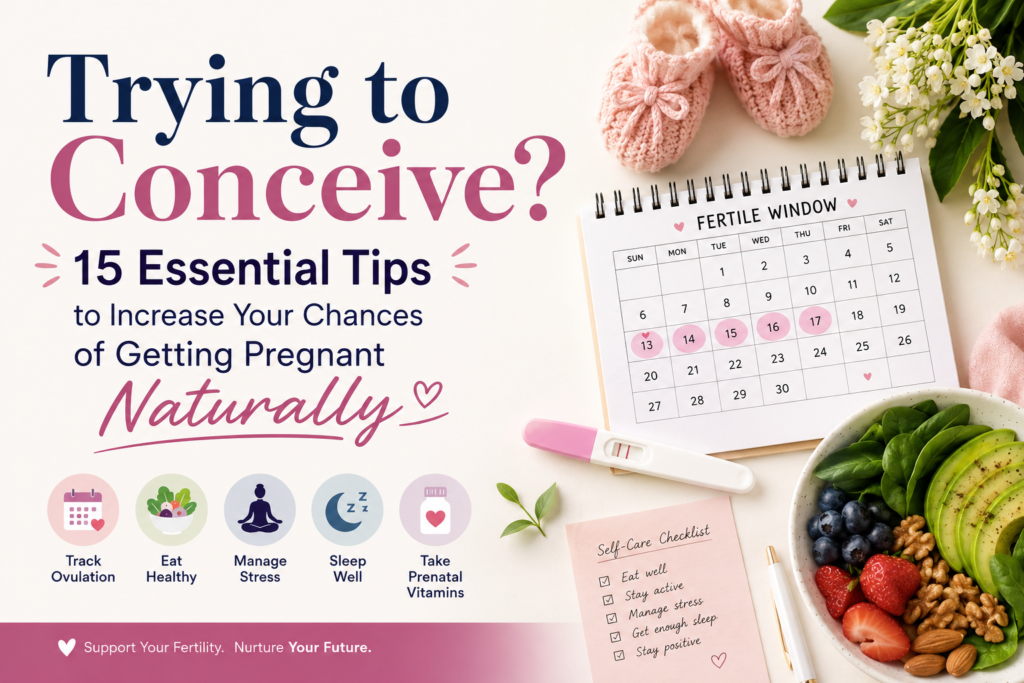
In this comprehensive guide, you’ll learn how conception happens, the factors that influence fertility, and 15 essential tips to increase your chances of getting pregnant naturally. Whether you’ve just started trying or have been trying for several months, this article will help you make informed decisions on your fertility journey.
What Does Trying to Conceive Naturally Mean?
Trying to conceive naturally means attempting to become pregnant through regular sexual intercourse without using fertility medications, intrauterine insemination (IUI), or in vitro fertilization (IVF). It involves understanding your reproductive cycle, maintaining a healthy lifestyle, and timing intercourse to coincide with ovulation.
Natural conception depends on several biological events occurring in the correct sequence. These include:
- The ovaries releasing a mature egg (ovulation)
- Healthy sperm reaching the egg
- Fertilization taking place in the fallopian tube
- The fertilized egg traveling to the uterus
- Successful implantation into the uterine lining
If any part of this process is disrupted, pregnancy may become more difficult.
For many couples, trying to conceive naturally also means preparing their bodies for a healthy pregnancy by eating a balanced diet, taking prenatal vitamins, managing chronic health conditions, and reducing lifestyle factors that can negatively affect fertility.
How Long Does It Usually Take to Get Pregnant?
One of the biggest misconceptions is that pregnancy happens immediately after stopping contraception. In reality, even healthy couples have only about a 20–25% chance of conceiving during each menstrual cycle when intercourse occurs during the fertile window.
Research suggests:
- Around 30% of healthy couples conceive within the first month.
- Approximately 75–80% conceive within six months.
- Around 85–90% conceive within one year.
- Most couples who have not conceived after one year should consider a fertility evaluation.
Age plays a significant role in fertility. Female fertility gradually declines after age 30 and more rapidly after age 35 because both the number and quality of eggs decrease over time. Male fertility also declines with age, although the changes are usually more gradual.
If you’re under 35 and have been trying for a year without success, it’s a good idea to speak with a healthcare professional. If you’re 35 or older, seek evaluation after six months of trying. Women over 40 should seek advice before or as soon as they begin trying to conceive.
How Pregnancy Happens
Understanding how pregnancy occurs can help you better understand why timing and reproductive health are so important when trying to conceive naturally.
Ovulation: The Release of an Egg
Ovulation is the process in which one of your ovaries releases a mature egg. This usually happens once during each menstrual cycle, approximately 12–16 days before your next period begins.
After ovulation, the egg survives for only 12–24 hours. During this short window, it must be fertilized by sperm for pregnancy to occur.
Many women experience signs of ovulation, including:
- Clear, stretchy cervical mucus that resembles raw egg whites
- Mild pelvic discomfort (sometimes called mittelschmerz)
- Increased sexual desire
- Slight rise in basal body temperature after ovulation
- Positive ovulation predictor kit (OPK) results
Recognizing these signs can help you identify your fertile window and time intercourse more effectively.
Fertilization: When Egg and Sperm Meet
After ejaculation, millions of sperm begin traveling through the cervix and uterus toward the fallopian tubes. Although millions start the journey, only a small number reach the egg.
If a healthy sperm successfully penetrates the egg, fertilization occurs. The fertilized egg, now called a zygote, begins dividing into multiple cells as it travels toward the uterus.
Healthy sperm can survive inside the female reproductive tract for up to five days, which is why intercourse before ovulation can still result in pregnancy.
Implantation
About 6–10 days after fertilization, the developing embryo reaches the uterus and attaches to the uterine lining. This process is known as implantation.
Once implantation occurs, the body begins producing human chorionic gonadotropin (hCG), the hormone detected by pregnancy tests.
Successful implantation requires a healthy uterine lining and proper hormonal support. Not every fertilized egg implants successfully, and early pregnancy loss can occur before a woman even realizes she is pregnant.
Factors That Affect Your Chances of Getting Pregnant Naturally
Many factors influence fertility. Some are within your control, while others are not.
Understanding these factors can help you make informed choices while trying to conceive naturally.
Age
Age is one of the most important factors affecting female fertility.
Women are born with all the eggs they will ever have. Over time, both the quantity and quality of these eggs decline.
Generally:
- Fertility is highest during the 20s.
- It gradually declines after age 30.
- The decline becomes more noticeable after age 35.
- Fertility decreases significantly after age 40.
This doesn’t mean pregnancy is impossible after 35 or 40, but it may take longer and sometimes require medical assistance.
Ovulation Problems
Regular ovulation is essential for pregnancy.
Conditions that interfere with ovulation include:
- Polycystic ovary syndrome (PCOS)
- Thyroid disorders
- High prolactin levels
- Excessive exercise
- Being underweight
- Obesity
- Chronic stress
Women with irregular or absent periods may not ovulate regularly, making conception more difficult.
Sperm Health
Pregnancy depends on both partners.
Healthy sperm should have:
- Adequate sperm count
- Good movement (motility)
- Normal shape (morphology)
- Healthy DNA
Male fertility can be affected by:
- Smoking
- Heavy alcohol use
- Obesity
- Heat exposure (such as frequent hot tubs)
- Certain medications
- Untreated medical conditions
Male factors contribute to infertility in approximately 40–50% of couples, highlighting the importance of evaluating both partners when conception is delayed.
Body Weight
Maintaining a healthy weight supports hormone balance and reproductive function.
Being overweight or obese may:
- Disrupt ovulation
- Reduce egg quality
- Increase insulin resistance
- Raise the risk of miscarriage
- Complicate pregnancy
Being underweight can also reduce fertility by affecting hormone production and stopping ovulation altogether.
Even modest weight loss in women who are overweight may improve ovulation and increase pregnancy rates.
Nutrition
Your diet provides the nutrients needed to support hormone production, egg quality, and overall reproductive health.
A fertility-friendly diet typically includes:
- Fruits and vegetables
- Whole grains
- Healthy fats
- Lean protein
- Legumes
- Nuts and seeds
- Dairy or fortified alternatives
On the other hand, diets high in processed foods, sugary drinks, and trans fats may negatively affect fertility over time.
Good nutrition also prepares your body for a healthy pregnancy once conception occurs.
Lifestyle Habits
Daily habits can have a significant impact on fertility.
Lifestyle factors that may reduce fertility include:
- Smoking or vaping
- Excessive alcohol intake
- Recreational drug use
- Chronic sleep deprivation
- High stress levels
- Sedentary lifestyle
- Excessive caffeine intake
The encouraging news is that many of these factors are modifiable, meaning healthy changes today can improve your reproductive health over time.
Underlying Medical Conditions
Certain health conditions can make it harder to conceive naturally.
These include:
- PCOS
- Endometriosis
- Uterine fibroids
- Thyroid disorders
- Diabetes
- Autoimmune diseases
- Sexually transmitted infections that damage the fallopian tubes
If you have a known medical condition, work closely with your healthcare provider to optimize your health before and during pregnancy.
15 Essential Tips for Trying to Conceive Naturally
1. Track Your Ovulation Accurately
If you’re trying to conceive naturally, one of the most important things you can do is identify when you ovulate. Since an egg survives for only 12–24 hours after it’s released, timing intercourse around ovulation significantly increases your chances of pregnancy.
Understanding Your Fertile Window
Your fertile window includes:
- The five days before ovulation
- The day of ovulation
- Possibly the day after ovulation
Because sperm can survive in the female reproductive tract for up to five days, having sperm already present before ovulation gives you the best chance of fertilization.
Ways to Track Ovulation
You don’t have to rely on guesswork. Several methods can help you predict ovulation more accurately:
Ovulation Predictor Kits (OPKs): Detect the luteinizing hormone (LH) surge that occurs 24–36 hours before ovulation.
Cervical Mucus Monitoring: Around ovulation, cervical mucus becomes clear, slippery, and stretchy, resembling raw egg whites.
Basal Body Temperature (BBT): Measuring your temperature each morning before getting out of bed can confirm that ovulation has occurred. A slight temperature rise indicates that ovulation has already taken place.
Cycle Tracking Apps: Many apps help predict your fertile days based on your menstrual history, although they are most accurate for women with regular cycles.
Pro Tip
Using both ovulation predictor kits and cervical mucus observations together often provides a more accurate picture than relying on a single method.
2. Have Sex During Your Fertile Window
Timing matters.
Having intercourse during your fertile window greatly increases the likelihood that sperm will be present when the egg is released.
How Often Should You Have Sex?
Experts generally recommend:
- Every 1–2 days during your fertile window
- Every 2–3 days throughout your cycle if you’re unsure when you ovulate
Having sex every day isn’t necessarily better. Sperm quality is generally maintained with intercourse every one to two days.
Common Mistake
Many couples wait until the day they think they are ovulating. By then, the opportunity may already be passing. Since sperm survive longer than eggs, having intercourse before ovulation is often more effective than waiting until after ovulation.
3. Maintain a Healthy Weight
Your body weight plays an important role in reproductive hormone balance.
Both being overweight and being underweight can interfere with ovulation and reduce fertility.
If You’re Overweight
Excess body fat may contribute to:
- Hormonal imbalance
- Irregular ovulation
- Insulin resistance
- Increased inflammation
Even losing 5–10% of your body weight, if medically appropriate, may improve ovulation in women with overweight or obesity.
If You’re Underweight
Being significantly underweight can:
- Stop ovulation altogether
- Reduce estrogen production
- Cause irregular or absent periods
A healthy weight supports regular menstrual cycles and increases the likelihood of successful conception.
Remember, every body is different. The goal isn’t achieving a “perfect” weight—it’s supporting your overall health.
4. Eat a Fertility-Friendly Diet
While no single food guarantees pregnancy, your diet can influence hormone production, egg quality, and overall reproductive health.
If you’re trying to conceive naturally, aim for a balanced eating pattern rather than restrictive dieting.
Foods That Support Fertility
Include more:
- Colorful fruits and vegetables
- Whole grains
- Beans and lentils
- Lean poultry
- Fish low in mercury
- Eggs
- Greek yogurt
- Nuts
- Seeds
- Avocados
- Olive oil
These foods provide nutrients such as:
- Folate
- Iron
- Zinc
- Vitamin D
- Omega-3 fatty acids
- Antioxidants
All of these nutrients play important roles in reproductive health.
Foods to Limit
Try to reduce:
- Sugary beverages
- Ultra-processed snacks
- Refined carbohydrates
- Trans fats
- Excessive fast food
These foods may contribute to inflammation and metabolic problems that can affect fertility over time.
Don’t Forget Hydration
Drinking enough water supports cervical mucus production, which helps sperm travel through the reproductive tract.
5. Take a Prenatal Vitamin with Folic Acid
Prenatal vitamins are recommended even before pregnancy occurs.
One of the most important nutrients is folic acid, which helps prevent neural tube defects that develop during the earliest weeks of pregnancy—often before a woman knows she is pregnant.
Most healthcare professionals recommend taking:
- 400 micrograms (mcg) of folic acid daily before conception and during early pregnancy, unless a higher dose is advised for specific medical reasons.
Many prenatal vitamins also contain:
- Iron
- Vitamin D
- Iodine
- Vitamin B12
- Choline
These nutrients support both maternal health and early fetal development.
It’s best to begin taking a prenatal vitamin at least one month before trying to conceive. I always keep these prenatal vitamins handy! Perfect for supporting a fertility.
6. Exercise Regularly—But Avoid Overtraining
Physical activity benefits almost every aspect of health, including fertility.
Regular exercise can help:
- Improve insulin sensitivity
- Maintain a healthy weight
- Reduce stress
- Improve sleep
- Support hormonal balance
What Type of Exercise Is Best?
Aim for moderate activities such as:
- Brisk walking
- Swimming
- Cycling
- Dancing
- Yoga
- Strength training
Can Too Much Exercise Affect Fertility?
Yes.
Very intense exercise—especially when combined with inadequate calorie intake—can disrupt ovulation in some women.
If you’re training for endurance sports or exercising vigorously every day, consider discussing your routine with your healthcare provider if you’re having difficulty conceiving.
The goal is balance, not perfection.
7. Prioritize Quality Sleep
Sleep is often overlooked when discussing fertility.
During sleep, your body regulates hormones involved in reproduction, metabolism, and stress.
Adults generally need 7–9 hours of quality sleep each night.
Poor sleep may contribute to:
- Hormonal imbalance
- Increased stress hormones
- Weight gain
- Insulin resistance
- Irregular menstrual cycles
Tips for Better Sleep
- Go to bed at the same time each night.
- Limit screen time before bed.
- Keep your bedroom cool and dark.
- Avoid large meals and excessive caffeine late in the day.
- Develop a relaxing bedtime routine.
Good sleep supports both physical and emotional well-being during your fertility journey.
8. Manage Stress in Healthy Ways
Trying to conceive can be emotionally challenging.
Month after month of negative pregnancy tests may lead to disappointment, anxiety, or frustration.
Although stress alone does not usually cause infertility, chronic stress can influence hormones, sleep, relationships, and healthy habits.
Healthy Ways to Reduce Stress
Consider:
- Deep breathing exercises
- Meditation
- Prayer or spiritual practices
- Gentle yoga
- Walking outdoors
- Journaling
- Talking with supportive friends or family
- Joining a fertility support group
- Speaking with a mental health professional if needed
Remember
Don’t blame yourself if you’re feeling stressed. Fertility challenges are common, and needing emotional support is a sign of strength—not weakness.
Taking care of your mental health is an important part of taking care of your reproductive health.
Key Takeaways
If you’re trying to conceive naturally, these first eight tips can help lay a strong foundation for fertility.
While these strategies cannot guarantee pregnancy, they support overall reproductive health and may improve your chances of conception.
9. Avoid Smoking and Vaping
If you are trying to conceive naturally, quitting smoking is one of the most important lifestyle changes you can make for your reproductive health.
Smoking affects fertility in both women and men.
How Smoking Can Affect Female Fertility
Smoking may:
- Reduce egg quality
- Accelerate loss of eggs over time
- Affect hormone production
- Increase the risk of miscarriage
- Increase the risk of complications during pregnancy
The chemicals in cigarette smoke can damage reproductive cells and affect the environment needed for healthy conception.
How Smoking Can Affect Male Fertility
Smoking may also reduce sperm health by affecting:
- Sperm count
- Sperm movement (motility)
- Sperm shape
- Sperm DNA quality
Because sperm production takes approximately 2–3 months, quitting smoking several months before trying to conceive can give the body time to produce healthier sperm.
What About Vaping?
Although vaping is sometimes considered an alternative to cigarettes, nicotine exposure can still affect reproductive health. If you are preparing for pregnancy, avoiding nicotine products is the safest choice.
10. Limit Alcohol Consumption
Alcohol can affect fertility, especially when consumed heavily.
For women, excessive alcohol intake may:
- Disrupt menstrual cycles
- Affect ovulation
- Influence hormone balance
- Increase the risk of pregnancy complications
For men, heavy alcohol consumption may:
- Lower testosterone levels
- Reduce sperm production
- Affect sperm quality
When trying to conceive naturally, many healthcare professionals recommend limiting alcohol or avoiding it altogether, especially because pregnancy can occur before a person knows they are pregnant.
If you drink alcohol regularly and are planning pregnancy, reducing your intake before conception is a positive step.
11. Monitor Your Caffeine Intake
Many people enjoy coffee, tea, or caffeinated drinks daily. Moderate caffeine intake is generally considered safe for most people, but very high amounts may affect fertility and pregnancy outcomes.
If you are trying to conceive naturally, consider keeping caffeine intake moderate.
Sources of caffeine include:
- Coffee
- Tea
- Energy drinks
- Chocolate
- Some medications
A practical approach is to avoid excessive caffeine consumption and discuss your intake with your healthcare provider, especially if you are having difficulty conceiving or preparing for pregnancy.
12. Support Your Partner’s Sperm Health
Fertility is a shared journey.
While many conversations about conception focus on women, sperm health plays an equally important role. Male factors contribute significantly to fertility challenges, which is why both partners should focus on healthy habits.
Ways Men Can Support Sperm Health
Maintain a Healthy Weight
Excess weight may affect testosterone levels and sperm production.
Eat a Balanced Diet
Nutrients important for sperm health include:
- Zinc
- Selenium
- Folate
- Vitamin C
- Vitamin E
- Omega-3 fatty acids
These nutrients support healthy sperm development.
Avoid Smoking
Smoking can damage sperm quality and increase oxidative stress.
Limit Excessive Alcohol
Heavy alcohol use may negatively affect sperm production and hormone balance.
Avoid Excessive Heat Exposure
Frequent exposure to high temperatures around the testicles may affect sperm production.
Examples include:
- Frequent hot tubs
- Prolonged heat exposure
Manage Stress and Sleep Well
Stress and poor sleep can influence hormone levels involved in sperm production.
Remember: preparing for pregnancy is a partnership. Both individuals should work together to create the healthiest possible environment for conception.
13. Manage Medical Conditions Before Pregnancy
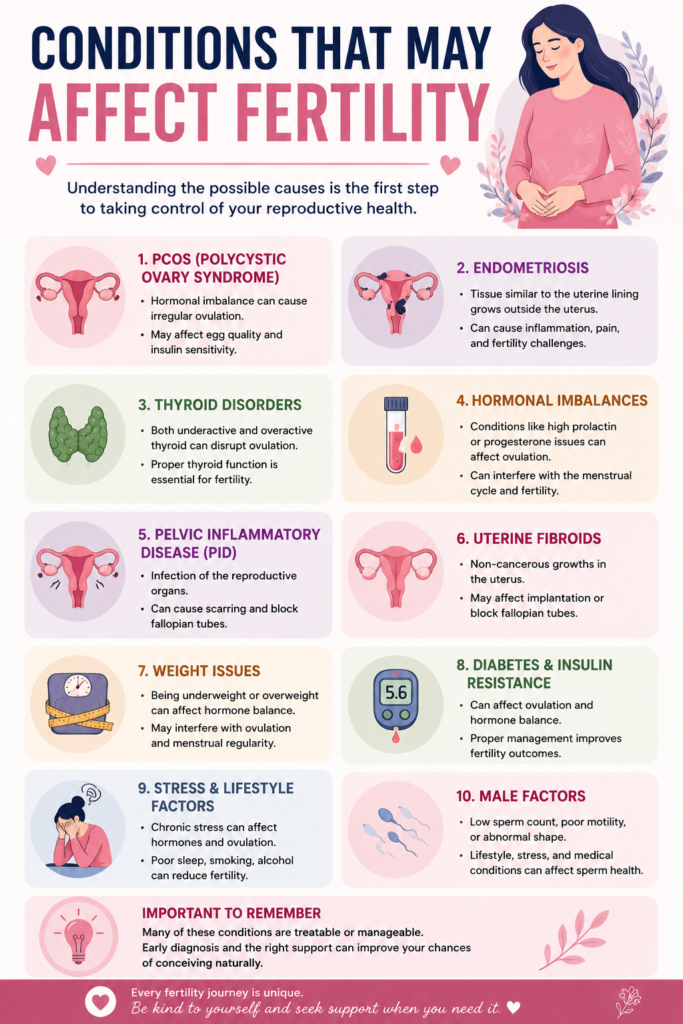
Certain health conditions can affect your ability to conceive. Managing these conditions before pregnancy can improve your chances and support a healthier pregnancy.
If you are trying to conceive naturally, consider having a preconception health check, especially if you have existing medical conditions.
Conditions That May Affect Fertility Include:
Polycystic Ovary Syndrome (PCOS)
PCOS is one of the most common causes of ovulation problems. Women with PCOS may experience:
- Irregular periods
- Difficulty predicting ovulation
- Hormonal imbalance
- Insulin resistance
Many women with PCOS can conceive naturally with proper management and support.
Endometriosis
Endometriosis occurs when tissue similar to the uterine lining grows outside the uterus.
It may affect fertility by causing:
- Inflammation
- Scarring
- Changes around the reproductive organs
Thyroid Disorders
Thyroid hormones play an important role in reproductive health.
Both an underactive thyroid and an overactive thyroid can affect menstrual cycles and fertility.
Diabetes
Poorly controlled blood sugar levels can affect ovulation and increase pregnancy risks.
Fibroids
Some uterine fibroids may interfere with implantation or pregnancy depending on their size and location.
14. Reduce Exposure to Environmental Toxins
We encounter many chemicals in everyday life. While it is impossible to avoid all environmental exposures, reducing unnecessary exposure may support reproductive health.
Potential fertility-related concerns include exposure to:
- Certain pesticides
- Heavy metals
- Some industrial chemicals
- Tobacco smoke
- Excessive air pollution
Practical Ways to Reduce Exposure
You can:
- Wash fruits and vegetables before eating
- Avoid smoking environments
- Use protective equipment when working with chemicals
- Follow safety instructions when handling cleaning products
- Choose safer alternatives when possible
The goal is not fear or perfection—it is making reasonable choices that support overall health.
15. Know When to Seek Fertility Help
Lifestyle changes can support fertility, but sometimes couples need medical evaluation and assistance.
Knowing when to seek help is an important part of your fertility journey.
Consider Speaking With a Healthcare Professional If:
You Are Under 35
Seek evaluation after:
- 12 months of regular unprotected intercourse without pregnancy
You Are 35 or Older
Seek evaluation after:
- 6 months of trying without pregnancy
Seek Help Earlier If You Have:
- Irregular or absent periods
- Severe pelvic pain
- Known PCOS or endometriosis
- Previous pelvic surgery
- History of reproductive infections
- Recurrent pregnancy loss
- Concerns about sperm health
A fertility evaluation usually looks at both partners.
It may include:
For women:
- Medical history review
- Hormone testing
- Ovulation assessment
- Ultrasound
- Evaluation of the uterus and fallopian tubes
For men:
- Semen analysis
- Medical history review
- Hormone testing when needed
Seeking help does not mean you have failed at natural conception. It simply means you are gathering information and getting the support you need.
Comparison Table: Fertility-Friendly Habits vs Habits That May Reduce Fertility
| Fertility-Friendly Habits | Habits That May Reduce Fertility |
|---|---|
| Tracking ovulation | Ignoring menstrual cycle patterns |
| Having intercourse during the fertile window | Missing the fertile days |
| Eating fruits, vegetables, whole grains, and healthy fats | Diet high in processed foods and added sugars |
| Taking folic acid before pregnancy | Waiting until pregnancy occurs to improve nutrition |
| Maintaining a healthy weight | Significant overweight or underweight |
| Regular moderate exercise | Excessive exercise without adequate nutrition |
| Getting 7–9 hours of sleep | Chronic sleep deprivation |
| Managing stress with healthy strategies | Long-term unmanaged stress |
| Avoiding smoking and nicotine | Smoking and vaping |
| Limiting alcohol intake | Heavy alcohol consumption |
| Supporting male fertility health | Ignoring sperm health |
| Managing medical conditions | Leaving health problems untreated |
| Regular healthcare check-ups | Delaying evaluation when there are concerns |
Common Mistakes Couples Make When Trying to Conceive Naturally
Even with the best intentions, some couples make mistakes that can reduce their chances of conception.
Mistake 1: Having Sex Only on the Day of Ovulation
Many couples wait until ovulation day, but the fertile window begins several days earlier.
Mistake 2: Assuming Fertility Is Only a Woman’s Issue
Both partners contribute to conception. Male fertility assessment is equally important.
Mistake 3: Taking Random Fertility Supplements Without Guidance
Some supplements may be helpful in specific situations, but they are not a replacement for a healthy lifestyle or medical advice.
Mistake 4: Comparing Your Journey With Others
Every couple’s fertility journey is different. Age, health history, genetics, and many other factors influence conception.
Frequently Asked Questions About Trying to Conceive Naturally
1. How long does it take to get pregnant naturally?
The time it takes to conceive varies from couple to couple.
Healthy couples who have regular intercourse during the fertile window may conceive within several months. However, it is normal for pregnancy not to happen immediately.
Several factors influence how quickly pregnancy occurs, including:
- Age
- Ovulation patterns
- Egg quality
- Sperm health
- Overall health
- Lifestyle factors
If pregnancy does not occur after 12 months of trying (for women under 35) or after 6 months (for women aged 35 and above), consider speaking with a healthcare professional.
2. What is the best time to have sex when trying to conceive naturally?
The best time to have sex when trying to conceive naturally is during your fertile window.
The fertile window includes:
- The five days before ovulation
- The day of ovulation
Having intercourse every one to two days during this period gives sperm the opportunity to be present when an egg is released.
Because ovulation timing can vary even in women with regular cycles, tracking ovulation signs can improve accuracy.
3. Can you get pregnant on your first month of trying?
Yes, pregnancy can happen during the first month of trying, but it is not guaranteed.
Even when couples have no fertility problems, the chance of conception in a single menstrual cycle is limited.
Many healthy couples need several months of trying before becoming pregnant.
The important thing is understanding your cycle, maintaining healthy habits, and giving yourself time.
4. What foods increase fertility naturally?
No specific food can guarantee pregnancy, but a balanced diet can support reproductive health.
Foods commonly associated with fertility-supportive eating patterns include:
- Leafy green vegetables
- Fruits
- Whole grains
- Beans and lentils
- Eggs
- Fish low in mercury
- Nuts and seeds
- Healthy oils such as olive oil
These foods provide nutrients involved in hormone production, egg health, sperm health, and pregnancy preparation.
5. Does stress prevent pregnancy?
Stress is a common concern among couples trying to conceive.
Everyday stress does not usually prevent pregnancy. However, chronic stress may affect:
- Sleep quality
- Eating habits
- Sexual intimacy
- Overall wellbeing
Managing stress through healthy coping strategies can support your physical and emotional health during your fertility journey.
6. How often should couples have sex when trying to conceive?
For most couples, having intercourse every one to two days during the fertile window is recommended.
If tracking ovulation feels stressful, having sex every two to three days throughout the menstrual cycle can also help ensure sperm is available when ovulation occurs.
7. Do fertility supplements help you get pregnant naturally?
Some supplements may support fertility in specific situations, but supplements alone cannot overcome major fertility problems.
Common nutrients discussed in fertility care include:
- Folic acid
- Vitamin D
- Iron (if deficient)
- Zinc
- Omega-3 fatty acids
Before starting supplements, especially high-dose supplements, it is best to discuss your needs with a healthcare professional.
8. Can PCOS affect your ability to get pregnant naturally?
Yes, PCOS can affect fertility, mainly because it can interfere with regular ovulation.
However, having PCOS does not mean pregnancy is impossible.
Many women with PCOS conceive naturally with proper support, including:
- Understanding ovulation patterns
- Improving insulin sensitivity
- Maintaining a healthy lifestyle
- Managing symptoms with medical guidance
9. Can age affect your chances of getting pregnant?
Yes.
Age is one of the strongest predictors of fertility, especially for women.
As women get older:
- Egg quantity decreases
- Egg quality declines
- The risk of chromosomal abnormalities increases
Male fertility can also change with age, although the decline is usually more gradual.
Understanding how age affects fertility can help couples make informed reproductive decisions.
10. When should I see a fertility specialist?
Consider seeking fertility advice if:
- You are under 35 and have been trying for 12 months without pregnancy.
- You are 35 or older and have been trying for 6 months without pregnancy.
- You have irregular periods.
- You have known reproductive health conditions.
- You or your partner have concerns about fertility.
Early evaluation can identify possible challenges and provide options.
Final Thoughts On Trying to Conceive Naturally
Trying to conceive naturally can be an exciting but sometimes emotional journey. While there is no single trick that guarantees pregnancy, understanding your body and making healthy lifestyle choices can improve your reproductive health.
The most important steps include:
- Learning when you ovulate
- Having intercourse during your fertile window
- Eating a balanced, nutrient-rich diet
- Maintaining a healthy lifestyle
- Taking prenatal vitamins with folic acid
- Supporting your partner’s reproductive health
- Managing medical conditions
- Seeking help when needed
Remember that fertility is influenced by many factors, and every couple’s journey is different.
The goal is not perfection—it is creating the healthiest possible foundation for conception and pregnancy.