
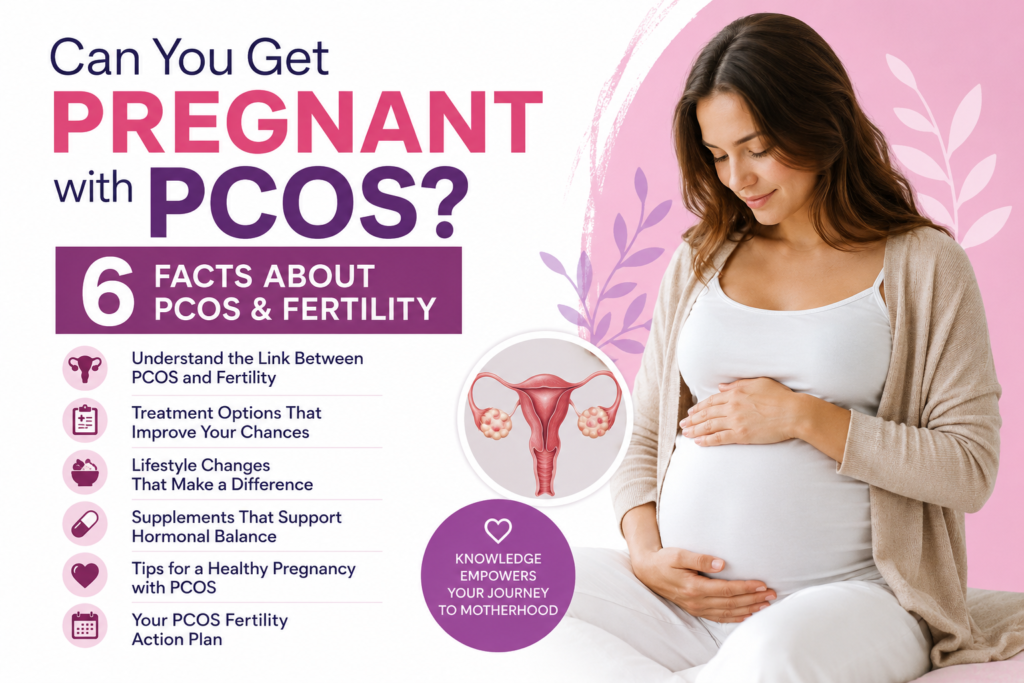
Key Facts About PCOS and Pregnancy
| Question | Short Answer |
| Can you get pregnant with PCOS | Yes. Many women with PCOS conceive naturally or with treatment |
| Does PCOS cause infertility? | PCOS can make conception more difficult nut it does not cause permanent infertility |
| Why does PCOS affect fertility? | Hormonal imbalance can interfere with regular ovulation |
| Can weight loss help? | Even a 5%-10% reduction in weight may improve ovulation |
| What is the best fertility medication for PCOS? | Letrozole is often considered the first-line treatment for ovulation induction. |
| Can supplements help? | Evidence suggests myo-inositol and D-chiro-inositol may support ovulation and insulin sensitivity. |
| Is IVF necessary? | Not always. Many women conceive before needing IVF. |
Introduction
Can you get pregnant with PCOS? This is the question most women with PCOS keep asking. Receiving a diagnosis of Polycystic Ovary Syndrome (PCOS) can feel overwhelming, especially if you hope to have children someday. One of the most common questions people ask after diagnosis is, “Can I still get pregnant with PCOS?” The answer is encouraging: yes, many individuals with PCOS successfully conceive and have healthy pregnancies.
The relationship between PCOS and fertility is complex but far from hopeless. While PCOS is one of the leading causes of ovulatory infertility, advances in medical treatment and growing knowledge about lifestyle interventions have dramatically improved pregnancy outcomes.
Many women with PCOS become pregnant naturally, while others may benefit from fertility medications, nutritional changes, weight management strategies, or assisted reproductive technologies. Understanding how PCOS affects ovulation and fertility is the first step toward creating an effective conception plan.
In this guide, we’ll explore how PCOS impacts fertility, the treatments available, natural strategies that may improve your chances of conception, and practical steps you can take if you’re trying to get pregnant.
How Does PCOS Affect Fertility?
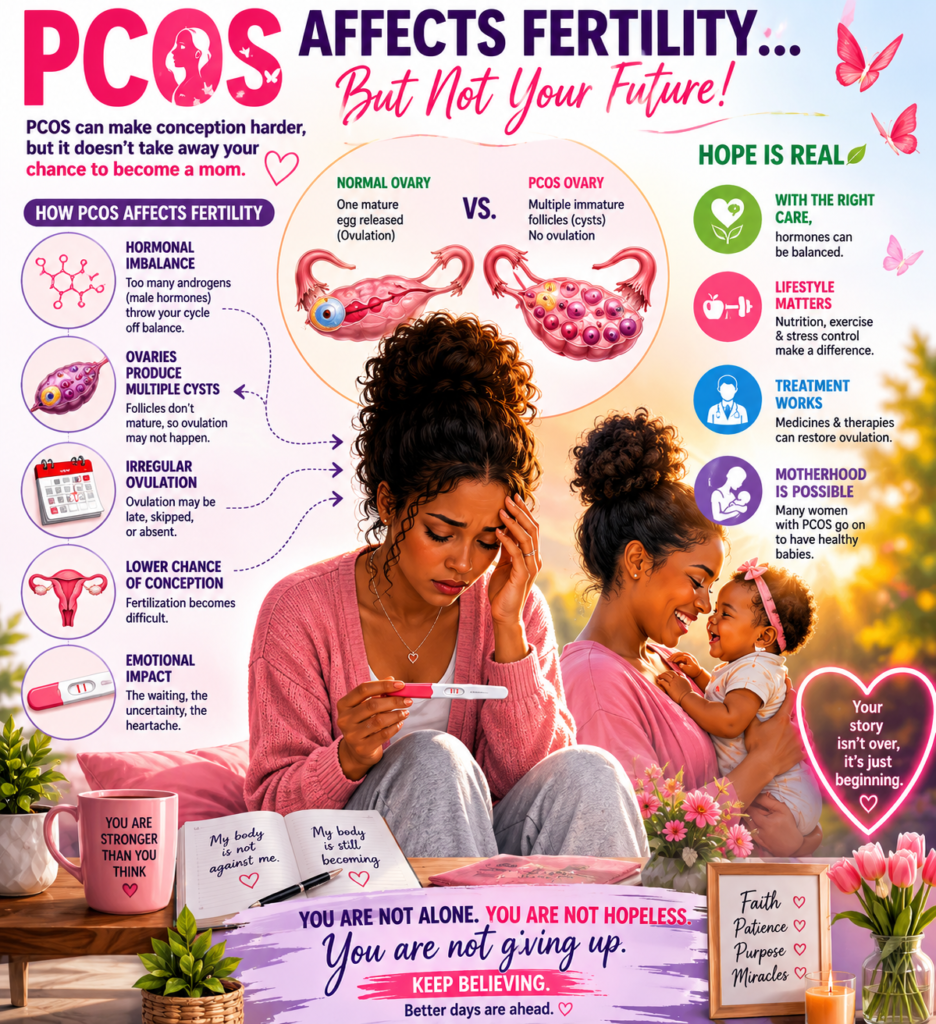
To understand can you get pregnant with PCOS, it is important to first understand how PCOS affects ovulation and reproductive health.
Polycystic Ovary Syndrome is one of the most common endocrine disorders affecting women of reproductive age. Although symptoms vary, fertility challenges often stem from disruptions in ovulation.
The Ovulation Connection
In a typical menstrual cycle, hormones work together to mature and release an egg from the ovaries. This process is known as ovulation.
With PCOS, several hormonal disturbances can interfere with this process:
- Elevated androgen levels
- Insulin resistance
- Increased luteinizing hormone (LH)
- Imbalances in follicle-stimulating hormone (FSH)
These hormonal changes may prevent ovarian follicles from fully maturing. Instead of releasing an egg, follicles may remain in the ovaries as small fluid-filled sacs.
As a result:
- Ovulation becomes irregular
- Ovulation may occur infrequently
- Ovulation may stop altogether (anovulation)
Without regular ovulation, pregnancy becomes more difficult because there is no egg available for fertilization.
As a result, women asking can you get pregnant with PCOS often struggle to identify fertile windows due to unpredictable cycles.
Insulin Resistance and Fertility
Approximately 50% to 70% of individuals with PCOS have some degree of insulin resistance.
When the body becomes less responsive to insulin, it compensates by producing more insulin. Elevated insulin levels stimulate the ovaries to produce more androgens, which further disrupt ovulation.
This creates a cycle:
Insulin resistance → High insulin → Increased androgens → Irregular ovulation → Reduced fertility
Egg Quality
Although ovulation problems are the primary fertility challenge in PCOS, researchers also believe hormonal imbalances may influence egg quality in some individuals.
Poorly regulated insulin levels, inflammation, and metabolic dysfunction can affect the environment in which eggs mature.
Improving metabolic health may therefore support both ovulation and overall reproductive health.
Does PCOS Mean You Are Infertile?
No.
Even if you are wondering can you get pregnant with PCOS, PCOS should not be viewed as a permanent infertility diagnosis.
Many women with PCOS become pregnant naturally. Others conceive with lifestyle changes, medication, or fertility treatments. Early intervention often leads to better outcomes.
Signs That PCOS May Be Affecting Your Fertility
You may experience fertility challenges related to PCOS if you have:
- Irregular menstrual cycles
- Missing periods
- Cycles longer than 35 days
- Difficulty predicting ovulation
- Acne
- Excess facial or body hair
- Weight gain
- Insulin resistance
- Multiple unsuccessful attempts to conceive
If you have been trying to conceive for 12 months (or 6 months if over age 35), consider speaking with a fertility specialist.
Medical Treatments for Conceiving with PCOS
PCOS Fertility Treatment Comparison
If you ever asked can you get pregnant with PCOS, modern fertility medicine offers several highly effective treatment options for people with PCOS.
Treatment typically follows a stepwise approach, beginning with the least invasive interventions.
Letrozole
Letrozole is currently considered the preferred first-line fertility medication for many women with PCOS.
Originally developed as a breast cancer medication, Letrozole stimulates ovulation by lowering estrogen levels temporarily.
This causes the brain to release more follicle-stimulating hormone (FSH), encouraging the ovaries to mature and release an egg.
Benefits include:
- Higher ovulation rates
- Improved pregnancy rates
- Lower risk of multiple pregnancies compared with some alternatives.
Clomiphene Citrate (Clomid)
Clomid has been used for decades to stimulate ovulation.
The medication tricks the brain into sensing lower estrogen levels, increasing FSH production and promoting egg development.
Advantages include:
- Well-studied safety profile
- Oral administration
- Relatively affordable
However, some individuals who do not respond to Clomid may respond better to Letrozole.
Metformin
Metformin is commonly prescribed when insulin resistance is a major contributor to PCOS symptoms.
Benefits may include:
- Improved insulin sensitivity
- Lower insulin levels
- Reduced androgen production
- More regular menstrual cycles
- Improved ovulation frequency
Metformin is often used alongside fertility medications for enhanced effectiveness.
Gonadotropin Injections
If oral medications fail, injectable fertility hormones may be recommended.
These medications directly stimulate the ovaries to produce mature eggs.
Because they can increase the risk of multiple pregnancies and ovarian hyperstimulation syndrome, close monitoring is essential.
Intrauterine Insemination (IUI)
IUI involves placing specially prepared sperm directly into the uterus around the time of ovulation.
This procedure may be considered when:
- Ovulation induction alone has not worked
- Mild male-factor infertility exists
- Timing intercourse is challenging
In Vitro Fertilization (IVF)
IVF is generally reserved for individuals who have not conceived through simpler methods.
The IVF process involves:
- Stimulating the ovaries
- Retrieving eggs
- Fertilizing eggs in a laboratory
- Transferring embryos to the uterus
Success rates can be excellent, particularly when PCOS is the primary fertility issue. For many women asking can you get pregnant with PCOS after failed treatments, IVF offers a strong option.
Fertility Treatment Success Rates
Success depends on several factors:
- Age
- Weight
- Metabolic health
- Ovulation frequency
- Duration of infertility
- Overall reproductive health
The earlier treatment begins, the better the chances of achieving pregnancy.
Lifestyle and Diet Strategies to Improve Fertility with PCOS
If you ever wonder can you get pregnant with PCOS, lifestyle modifications remain one of the most powerful tools for improving fertility and supporting hormonal balance.
Follow an Insulin-Lowering Diet
Because insulin resistance plays a major role in PCOS, dietary changes can significantly improve hormonal balance.
Focus on:
Complex Carbohydrates
Choose:
- Oats
- Brown rice
- Quinoa
- Sweet potatoes
- Whole grains
These foods release glucose more slowly and help reduce insulin spikes.
Lean Proteins
Examples include:
- Fish
- Chicken
- Turkey
- Eggs
- Greek yogurt
- Legumes
Protein supports blood sugar stability and satiety.
High-Fiber Foods
Fiber may help improve insulin sensitivity and hormone balance.
Good options include:
- Vegetables
- Fruits
- Beans
- Lentils
- Chia seeds
- Flaxseeds
Maintain a Healthy Weight
Excess weight can worsen insulin resistance and hormonal imbalances.
Research shows that losing just 5% to 10% of body weight may:
- Improve ovulation
- Increase menstrual regularity
- Enhance fertility outcomes
Even modest changes can make a meaningful difference.
Exercise Regularly
Physical activity improves insulin sensitivity and metabolic health.
Aim for:
- 150 minutes of moderate exercise weekly
- Strength training twice weekly
- Daily movement whenever possible
Examples include:
- Walking
- Cycling
- Swimming
- Resistance training
- Yoga
Manage Stress
Trying to conceive can be emotionally exhausting.
Chronic stress may affect hormone regulation and overall wellbeing.
Helpful strategies include:
- Meditation
- Deep breathing
- Journaling
- Counseling
- Support groups
Supplements That May Support PCOS Fertility
Always consult a healthcare professional before beginning supplements.
Myo-Inositol and D-Chiro-Inositol
Among the most studied supplements for PCOS.
Potential benefits of inositol include:
- Improved insulin sensitivity
- Better ovulation rates
- More regular menstrual cycles
- Enhanced egg quality
If you’re considering an inositol supplement, look for products that provide a balanced combination of myo-inositol and D-chiro-inositol.
Omega-3 Fatty Acids
May support:
- Reduced inflammation
- Improved insulin sensitivity
- Better cardiovascular health
A high-quality fish oil or algae-based omega-3 supplement may help support your overall reproductive and metabolic health.
Vitamin D
Vitamin D deficiency is common in individuals with PCOS.
Adequate levels may support:
- Hormonal balance
- Ovulation
- Reproductive health
If your vitamin D levels are low, a quality vitamin D3 supplement may help support healthy hormone function.
Prenatal Vitamins
Anyone trying to conceive should discuss prenatal supplementation with their healthcare provider.
Key nutrients include:
- Folic acid
- Iron
- Iodine
- Vitamin D
Starting a comprehensive prenatal vitamin before conception can help ensure your body has the nutrients needed to support early fetal development
Your PCOS Pregnancy Checklist
Checklist for you if you’ve ever wondered can you get pregnant with PCOS
✓ Track menstrual cycles
✓ Learn to recognize ovulation signs
✓ Schedule a preconception appointment
✓ Check blood sugar and insulin markers
✓ Discuss fertility medications if needed
✓ Begin prenatal vitamins
✓ Focus on protein-rich meals
✓ Increase physical activity
✓ Prioritize sleep
✓ Reduce stress
✓ Maintain a healthy weight
✓ Discuss supplements with your healthcare provider
✓ Seek support from a reproductive endocrinologist if conception is delayed
Frequently Asked Questions
Can you get pregnant with PCOS Naturally?
Yes. Many women with PCOS conceive naturally, particularly when ovulation becomes more regular through lifestyle changes or treatment.
How long does it take to get pregnant with PCOS?
The timeline varies depending on age, ovulation frequency, metabolic health, and other fertility factors. Some individuals conceive within months, while others may require fertility assistance.
Is PCOS the same as infertility?
No. PCOS can make conception more difficult, but it does not mean you are permanently infertile.
What is the best fertility treatment for PCOS?
Letrozole is often considered the preferred first-line medication for ovulation induction, though treatment should be individualized.
Does weight loss improve fertility in PCOS?
Yes. Losing 5% to 10% of body weight may improve hormone balance, menstrual regularity, and ovulation.
Can inositol help with fertility?
Research suggests myo-inositol and D-chiro-inositol may improve insulin sensitivity and ovulation in women with PCOS.
Can women with PCOS have healthy pregnancies?
Yes. Many women with PCOS have healthy pregnancies and healthy babies, particularly when they receive appropriate prenatal care.
Conclusion
If you are still wondering can you get pregnant with PCOS, the answer is yes — it is absolutely possible.
If you have PCOS and dream of becoming pregnant, there is reason to remain hopeful. Although PCOS can interfere with ovulation and make conception more challenging, it is one of the most treatable causes of infertility. Through a combination of lifestyle modifications, targeted medical treatments, and evidence-based supplements, many women successfully achieve pregnancy.
The key is early intervention, consistent monitoring, and personalized care. Whether your journey involves natural conception, fertility medications, or assisted reproductive technologies, effective options are available.
Medical Disclaimer
This content is for informational purposes only and does not substitute for professional medical advice. Always consult a qualified healthcare professional regarding fertility concerns, diagnosis, treatment options, or changes to your healthcare plan.
Written by Felicity Jehu-Appiah
Medical graduate (MBBS), health writer specializing in hormonal health, PCOS, and women’s wellness.
Great content! Keep up the good work!
Thank you very much