
Introduction
PCOS is one of the most common hormonal conditions affecting women worldwide, yet many people still struggle to recognize the symptoms early. From irregular periods and acne to weight changes and fertility challenges, PCOS can affect multiple areas of health and overall well-being.
Polycystic Ovary Syndrome, commonly known as PCOS, is a condition that affects how the ovaries function. It is often linked to hormonal imbalance, insulin resistance, and irregular ovulation. Although PCOS is common, many women go years without receiving a diagnosis because symptoms can appear differently from person to person.
For some women, the first signs may include missed periods or stubborn acne. Others may notice difficulty losing weight, excess facial hair growth, or emotional changes. Because the condition affects hormones, it can influence energy levels, skin health, metabolism, fertility, and mood.
The good news is that PCOS can be managed. Understanding what is happening inside the body is the first step toward improving symptoms and supporting long-term health. With balanced lifestyle habits, stress management, proper nutrition, and medical guidance when needed, many women are able to feel healthier and more in control of their bodies.
This guide explains PCOS in a simple and easy-to-understand way, including common symptoms, possible causes, diagnosis, natural support strategies, and ways to improve overall hormonal health.
What is PCOS?
PCOS is one of the most common hormonal conditions affecting women worldwide, yet many people still struggle to recognize the symptoms early. From irregular periods and acne to weight changes and fertility challenges, PCOS can affect multiple areas of health and overall well-being.
Polycystic Ovary Syndrome, commonly known as PCOS, is a condition that affects how the ovaries function. It is often linked to hormonal imbalance, insulin resistance, and irregular ovulation. Although PCOS is common, many women go years without receiving a diagnosis because symptoms can appear differently from person to person.
For some women, the first signs may include missed periods or stubborn acne. Others may notice difficulty losing weight, excess facial hair growth, or emotional changes. Because the condition affects hormones, it can influence energy levels, skin health, metabolism, fertility, and mood.
The good news is that PCOS can be managed. Understanding what is happening inside the body is the first step toward improving symptoms and supporting long-term health. With balanced lifestyle habits, stress management, proper nutrition, and medical guidance when needed, many women are able to feel healthier and more in control of their bodies.
This guide explains PCOS in a simple and easy-to-understand way, including common symptoms, possible causes, diagnosis, natural support strategies, and ways to improve overall hormonal health.
Common PCOS Symptoms
PCOS symptoms can vary widely from one woman to another. Some women experience only mild symptoms, while others may notice more significant changes.
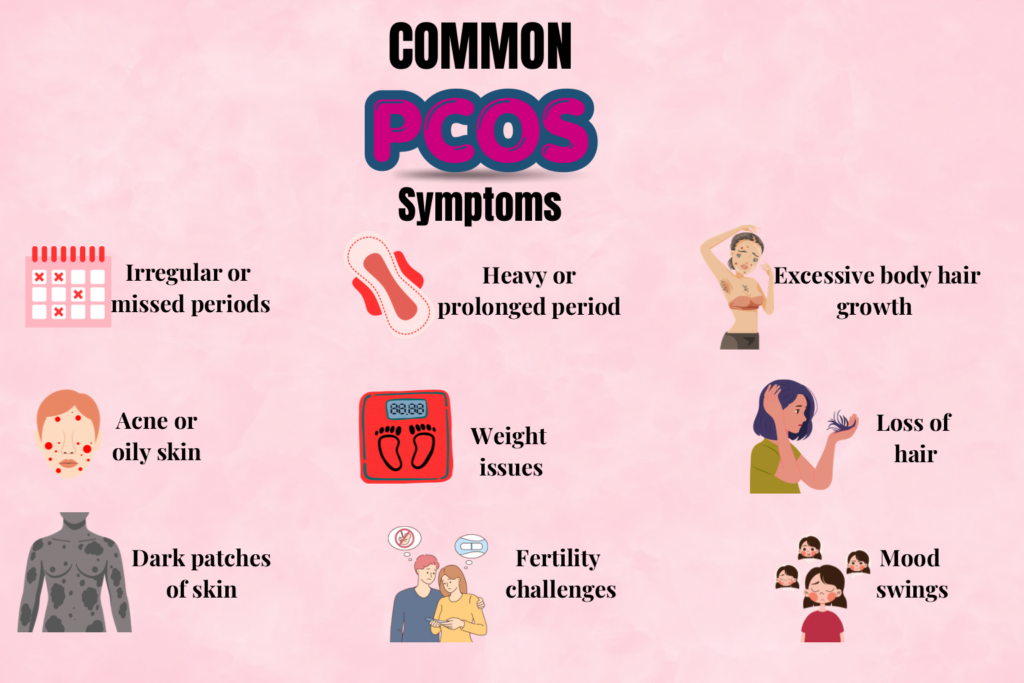
PCOS symptoms vary widely, but some of the most common include:
- Irregular or missed periods
- Heavy or prolonged menstrual bleeding
- Excess hair growth on face or body (hirsutism)
- Acne or oily skin
- Weight gain or difficulty losing weight
- Thinning hair or hair loss on the scalp
- Dark patches of skin (especially around neck or underarms)
- Fertility challenges
- Mood swings or emotional changes
Irregular periods are one of the most common signs of PCOS. Some women may have fewer than eight periods a year, while others may skip periods for several months.
Skin changes are also common. Hormonal imbalance can increase oil production, which may contribute to acne breakouts, especially around the jawline and chin.
Many women with PCOS also struggle with insulin resistance, which can make weight management more difficult even when maintaining healthy habits. Read more on PCOS belly and how to get rid of it.
It is important to remember that symptoms do not always look the same in every woman. Some women with PCOS may appear lean and still experience hormonal imbalance and irregular ovulation.
What Causes PCOS?
The exact cause of PCOS is not fully understood, but several factors are believed to contribute to its development.
1. Hormonal Imbalance
One of the main features of PCOS is higher levels of androgens, which can disrupt ovulation and affect physical symptoms like acne and hair growth.
2. Insulin Resistance
Many women with PCOS have insulin resistance, meaning the body has difficulty using insulin effectively. This can lead to higher insulin levels, which may further increase androgen production.
3. Genetics
PCOS often runs in families, suggesting a genetic component. If a close relative has PCOS, the likelihood of developing it may be higher.
4. Lifestyle and Stress Factors
While lifestyle does not directly cause PCOS, factors such as chronic stress, poor sleep, and dietary habits can worsen symptoms and hormone imbalance.
How PCOS Affects the Body
PCOS is more than a reproductive condition. Because hormones influence many systems in the body, PCOS can affect overall health in different ways.
Metabolism and Weight
Hormonal imbalance and insulin resistance can affect metabolism, making it easier to gain weight and more difficult to lose it.
Skin and Hair
Higher androgen levels may contribute to acne, oily skin, facial hair growth, or scalp hair thinning.
Emotional Health
Living with PCOS can sometimes affect confidence and emotional well-being. Mood swings, anxiety, and low self-esteem may occur, especially when symptoms impact appearance or fertility.
Fertility
Irregular ovulation can make it more difficult to predict fertile windows or become pregnant naturally. However, many women with PCOS are still able to conceive with proper support and treatment. Ever wondered if you can get pregnant with PCOS, read all answers to your question here.
Energy Levels
Blood sugar fluctuations and hormone imbalance can contribute to fatigue and low energy throughout the day.
The Connection Between PCOS and Insulin Resistance
Insulin resistance is one of the most important factors linked to PCOS.
When cells stop responding properly to insulin, the body produces more insulin to compensate. Higher insulin levels can increase androgen production in the ovaries, worsening symptoms like acne, irregular periods, and weight gain.
Insulin resistance may also increase the risk of:
- Type 2 diabetes
- High cholesterol
- High blood pressure
- Metabolic syndrome
This is why blood sugar balance is an important part of managing PCOS naturally.
How is PCOS Diagnosed?
Diagnosing PCOS can sometimes take time because symptoms vary between individuals.
Healthcare providers may use several methods to evaluate symptoms and hormone health.
Medical History
Doctors often ask about menstrual cycles, symptoms, weight changes, and family history.
Blood Tests
Hormone tests may help check androgen levels, insulin levels, thyroid function, and other reproductive hormones.
Ultrasound
An ultrasound may be used to look at the ovaries and check for multiple follicles.
Ovulation Patterns
Irregular ovulation or missed periods may also help support a diagnosis.
Because symptoms overlap with other conditions, proper medical evaluation is important
How to Manage PCOS Naturally
While there is no single cure for PCOS, many lifestyle strategies can help support hormone balance and reduce symptoms.
1. Balanced Nutrition
Eating regular, balanced meals can help support stable blood sugar levels. Focus on:
- protein-rich foods
- healthy fats
- fiber-rich vegetables
- whole grains
Reducing highly processed foods and excess sugar may also help improve insulin sensitivity.
2. Regular Movement
Exercise can improve insulin function and support hormone balance. Even gentle activities like walking can be beneficial when done consistently.
3. Stress Management
Chronic stress can worsen hormonal imbalance. Relaxation techniques such as deep breathing, journaling, or mindfulness can support overall well-being.
4. Sleep Quality
Poor sleep can affect insulin and hormone regulation. A consistent sleep schedule supports better hormonal balance.
5. Medical Support
For some women, medical treatment may be necessary depending on symptoms and goals. It is always important to work with a healthcare provider for proper diagnosis and guidance. Others use PCOS supplements for support. To know the benefits of inositol to PCOS, read this article PCOS Inositol Supplements: The Secret to Better Hormone Balance?
Common Myths About PCOS
Myth 1: Everyone with PCOS Has Ovarian Cysts
Not all women with PCOS have ovarian cysts. Hormonal imbalance and ovulation patterns are more important for diagnosis.
Myth 2: Only Overweight Women Get PCOS
Lean women can also have PCOS. Weight is not the only factor involved.
Myth 3: You Cannot Get Pregnant with PCOS
Many women with PCOS become pregnant successfully with proper support and treatment.
Myth 4: PCOS is Just About Periods
PCOS affects multiple systems in the body, including metabolism, skin health, mood, and energy levels.
Possible Long-Term Health Risks of PCOS
Without proper management, PCOS may increase the risk of certain health conditions over time.
These may include:
- Type 2 diabetes
- High cholesterol
- High blood pressure
- Sleep apnea
- Anxiety and depression
- Heart health concerns
This is why long-term lifestyle support and regular health checkups are important.
Living with PCOS
Living with PCOS can sometimes feel frustrating, especially when symptoms affect confidence, energy, or fertility goals.
However, PCOS does not define a woman’s worth, beauty, or future.
Learning how the body responds to food, stress, sleep, and movement can help women make informed choices that support long-term wellness.
Small habits practiced consistently often create meaningful improvements over time.
Building a supportive routine, seeking medical guidance when needed, and focusing on overall health rather than perfection can make managing PCOS feel more achievable.
Final Thoughts
PCOS is a common hormonal condition that affects many women worldwide. Although symptoms can sometimes feel overwhelming, understanding the condition is an important first step toward improving health and well-being.
From nutrition and movement to stress management and sleep, many lifestyle habits can support hormone balance naturally. Medical guidance may also play an important role depending on individual symptoms and health goals.
Every woman’s experience with PCOS is different, which is why personalized care and self-awareness matter.
With knowledge, support, and consistent healthy habits, many women with PCOS are able to reduce symptoms, improve their quality of life, and feel more confident in their health journey.
Pingback: Best PCOS Supplements for Hormonal Balance (Review Guide)
Pingback: PCOS Inositol Supplements: The Secret to Hormonal Balance?
Pingback: Hormonal Imbalance in Women: Warning Signs to Know
Pingback: PCOS Belly: Causes, Symptoms and How to Reduce it Naturally - Polished & Healthy
Pingback: How to Lose Weight With PCOS: 8 Steps for Sustainable Results