
Introduction
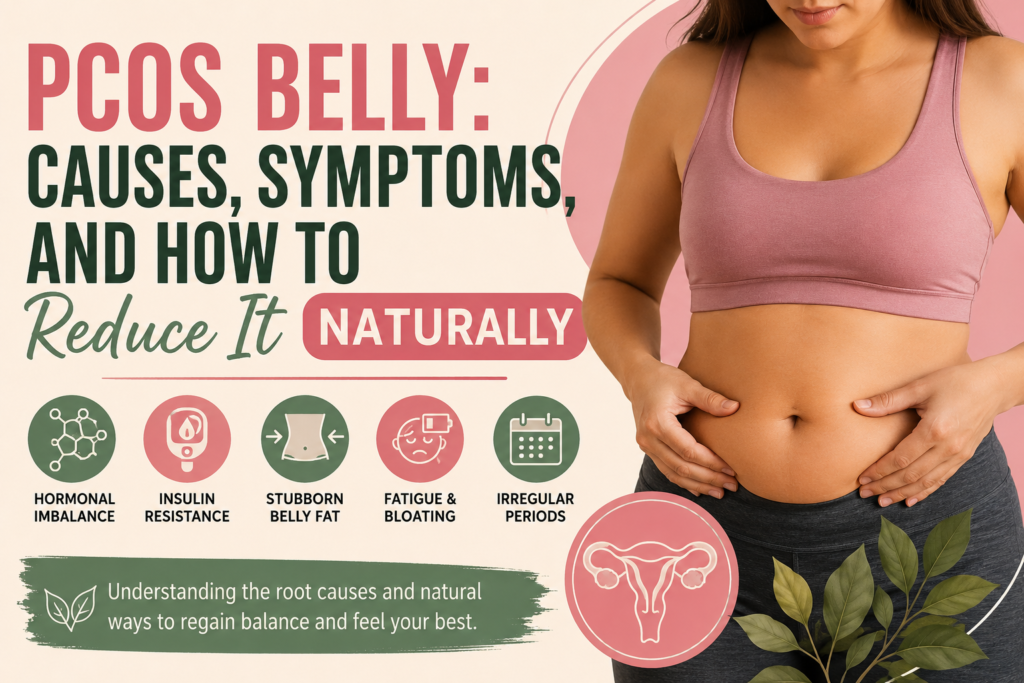
Polycystic Ovary Syndrome (PCOS) affects millions of women worldwide, and one of the most frustrating symptoms is the development of PCOS belly. Many women notice stubborn abdominal fat that seems resistance to diet and exercise. Unlike general weight gain, PCOS is often linked to hormonal imbalance, insulin resistance, and chronic inflammation.
Understanding what causes a PCOS belly and learning how to address the root issues can help improve both your appearance and overall health. In this guide, we’ll explore why PCOS causes abdominal weight gain and the most effective strategies to reduce naturally.
What is PCOS Belly?
A PCOS belly refers to excess fat accumulation around the abdomen that commonly occurs in women with PCOS. This fat is often concentrated around the waist, lower stomach, creating a rounded midsection.
Unlike regular weight gain, abdominal fat associated with PCOS is driven by hormonal and metabolic factors rather than simply consuming too many calories.
Women with PCOS may experience
- Increase waist circumfrence.
- Stubborn lower belly fat.
- Difficult in lisung weight.
- Bloating.
- Increased cravings of sugar and carbohydrate.
The appearance and severity of PCOS may vary from person to person, but underlying hormonal issues are involved.
Why Does PCOS cause Belly Fat
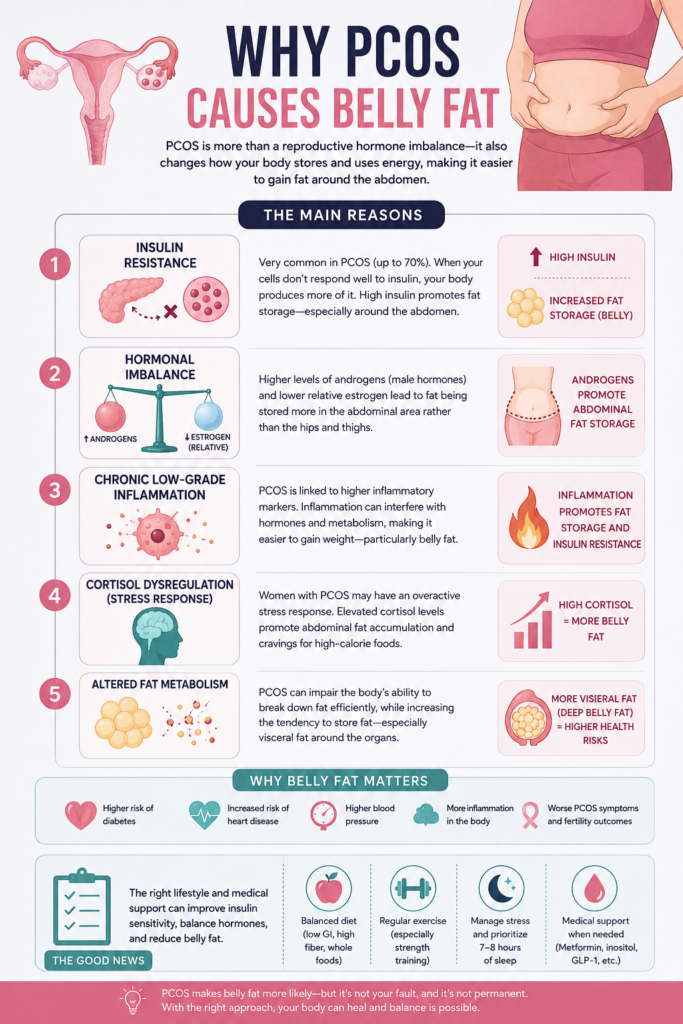
PCOS causes belly fat primarily because of insulin resistance and elevated androgen levels. High insulin levels encourage the body to store fat around the abdomen, while hormonal imbalances and inflammation make it harder to burn stored fat and maintain a healthy weight.
Insulin Resistance and PCOS Belly
One of the most significant causes of a PCOS belly is insulin resistance.
Insulin is a hormone that helps move glucose from the bloodstream into cells for energy. However, many women with PCOS become less responsive to insulin. As a result, the body produces more insulin to compensate.
High insulin levels encourage the body to store fat, especially around the abdomen.
Common signs of insulin resistance include:
- Fatigue after meals
- Sugar cravings
- Difficulty losing weight
- Increased hunger
- Dark patches of skin
Reducing insulin resistance is often the first step toward reducing a PCOS belly.
Hormonal Imbalances
Women with PCOS often have elevated androgen levels.
Androgens are commonly known as male hormones, although women naturally produce them as well. When androgen levels become too high, they can contribute to:
- Weight gain
- Increased abdominal fat
- Acne
- Excess facial hair
These hormonal changes can make belly fat more difficult to lose. Ever wondered if you can get pregnant with PCOS, read all answers to your question here.
Chronic Inflammation
Research suggests that women with PCOS frequently experience low-grade chronic inflammation.
Inflammation may contribute to:
- Increased insulin resistance
- Weight gain
- Metabolic dysfunction
- Hormonal imbalance
This combination creates a cycle that encourages abdominal fat storage.
High Cortisol Levels
Stress can worsen a PCOS belly.
When stress levels rise, the body releases cortisol. Elevated cortisol levels may increase appetite and promote fat storage around the midsection.
Women with PCOS often report higher stress levels due to symptoms such as infertility concerns, irregular periods, and body image challenges.
Symptoms Associated With a PCOS Belly
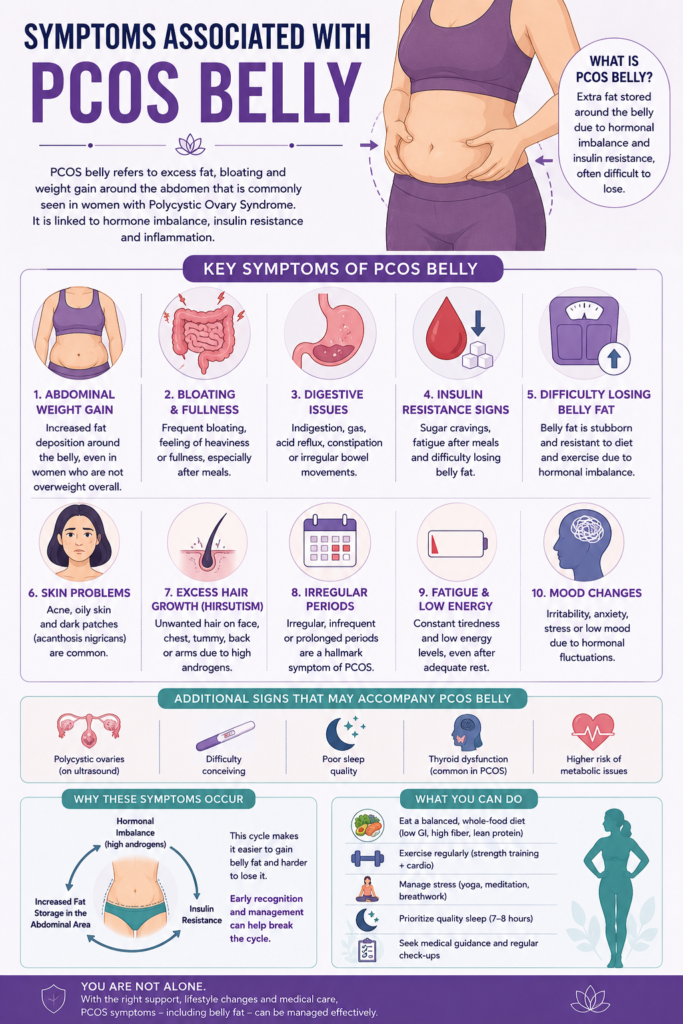
Although abdominal weight gain is the most obvious sign, other symptoms often occur alongside it.
These may include:
- Bloating
- Difficulty losing weight
- Fatigue
- Irregular menstrual cycles
- Increased cravings
- Acne
- Excess hair growth
- Mood swings
If you experience several of these symptoms, addressing the root causes of PCOS may help improve your overall health.
How to Reduce a PCOS Belly Naturally
Follow a Low-Glycemic Diet
One of the most effective ways to reduce a PCOS belly is by stabilizing blood sugar levels.
Low-glycemic foods release glucose slowly and help prevent insulin spikes.
Focus on:
- Non-starchy vegetables
- Berries
- Lentils
- Beans
- Oats
- Quinoa
- Sweet potatoes
To further support stable blood sugar levels, some individuals find it helpful to incorporate additional tools into their routine, such as blood sugar support supplements, glucose monitoring devices, or evidence-based meal-planning resources
Limit:
- Sugary drinks
- White bread
- Pastries
- Candy
- Processed snacks
Increase Protein Intake
Protein helps support weight loss and improves satiety.
Good protein sources include:
- Eggs
- Greek yogurt
- Chicken
- Turkey
- Fish
- Tofu
- Cottage cheese
Aim to include protein at every meal to help reduce cravings and stabilize blood sugar.
Eat More Fiber
Fiber slows digestion and supports healthy blood sugar regulation.
Excellent fiber-rich foods include:
- Chia seeds
- Flaxseeds
- Vegetables
- Legumes
- Whole grains
- Berries
Some women prefer to support their fiber intake with simple daily additions like chia seeds or a fiber supplement, especially on busy days when meals are inconsistent.
A commonly used option can be found here.
Exercise Consistently
Regular exercise can significantly reduce a PCOS belly by improving insulin sensitivity and increasing calorie expenditure.
The best forms of exercise include:
Strength Training for PCOS Belly
Strength training helps build muscle, which increases metabolic rate.
Try:
- Squats
- Lunges
- Deadlifts
- Resistance band workouts
Aim for two to four sessions weekly.
Walking and Cardio
Walking is one of the most underrated exercises for PCOS.
Benefits include:
- Improved insulin sensitivity
- Reduced stress
- Increased calorie burn
A daily 30-minute walk can produce meaningful results over time.
Improve Sleep Quality
Poor sleep can worsen hormonal imbalances and insulin resistance.
For better sleep:
- Maintain a regular bedtime
- Limit screen exposure before bed
- Avoid caffeine late in the day
- Keep your bedroom cool and dark
Most adults need seven to nine hours of quality sleep each night.
Manage Stress
Stress management is essential when addressing a PCOS belly.
Helpful strategies include:
- Yoga
- Meditation
- Deep breathing
- Journaling
- Spending time outdoors
Lower stress levels can help reduce cortisol production and support weight management.
Comparing the Most Effective Treatments for a PCOS Belly
There is no single treatment that works for everyone with a PCOS belly. The most effective approach often combines nutrition, exercise, stress management, and targeted supplements. The table below compares the most common treatment options and how they may help reduce abdominal fat associated with PCOS.
| Treatment Options | How It Helps a PCOS Belly | Benefits | Potential Drawbacks |
| Low-Glycemic Diet | Reduces insulin spikes and fat storage | Supports weight loss and improves blood sugar control | May require consistent meal planning |
| High-Protein Diet | Increases fullness and stabilizes blood sugar | Reduces cravings and overeating | May require dietary adjustments |
| Strength Training | Builds muscles and boosts metabolism | Help burn abdominal and improves insulin sensitivity | Results may take times and consistency |
| Walking & Cardio | Increases calorie expenditure and supports heart health | Easy to star and maintain | May not be enough along for significant weight loss |
| Stress Management | Lowers cortisol levels that contributes to belly fat | Improves mood and hormone balance | Benefits may take time to notice |
| Better Sleep Habit | Supports healthy hormone regulation | Reduces cravings and improves metabolism | Lifestyle changes maybe needed |
| Inositol Supplements | Improves insulin sensitivity and hormonal balance | Backed by reach for PCOS management | Results vary among individuals |
| Omega-3 Supplements | Helps reduce inflammation | Supports metabolic and healthy heart | May cause mild digestive problem |
| Weight Loss Medication (If prescribed) | Can support significant weight reduction | May improve PCOS | Requires medical supervision |
| Medical Treatment for PCOS | Addresses underlying hormonal issues | Can improve multiple symptoms | Depends on individual treatment plan |
Best Supplements for PCOS Belly
Certain supplements may support hormone balance, insulin function, and overall metabolic health in women with PCOS. While supplements are not a cure, they are often used alongside diet and lifestyle changes to support symptom management over time.
Inositol
Inositol is one of the most researched supplements for PCOS.
Potential benefits include:
- Improved insulin sensitivity
- Better ovulation
- Reduced cravings
- Weight management support
Some people choose to include a high-quality myo-inositol supplement as part of their daily routine for consistency and convenience, especially when dietary sources alone are not enough.
You can view one commonly used option here.
Omega-3 Fatty Acids
Omega-3s may help reduce inflammation and support metabolic health.
Sources include:
- Fatty fish
- Fish oil supplements
For many people, getting enough omega-3 from diet alone can be challenging, especially if fish intake is limited. In such cases, a supplement is often used as a more consistent option.
One commonly used omega-3 fish oil supplement can be viewed here.
Magnesium
Magnesium supports:
- Blood sugar regulation
- Stress management
- Sleep quality
Despite its importance, many people do not consistently get enough magnesium through diet alone, especially when intake of whole foods is low or stress levels are high, which can increase demand for this mineral.
In such cases, magnesium supplements are commonly used as a practical way to support daily intake, with magnesium glycinate often chosen due to its gentle effect on digestion.
One magnesium glycinate supplement option can be viewed here.
Vitamin D
Vitamin D deficiency is common among women with PCOS.
Adequate levels may support:
- Hormone balance
- Insulin sensitivity
- Immune function
Because vitamin D is mainly obtained through sunlight exposure and certain foods, many people may not consistently reach optimal levels, especially during periods of limited sun exposure.
In these cases, vitamin D3 supplements are commonly used to help maintain consistent intake throughout the year.
One vitamin D3 supplement option can be viewed here.
Foods That May Worsen a PCOS Belly
Certain foods can contribute to inflammation and insulin spikes.
Try limiting:
- Sugary beverages
- Refined carbohydrates
- Highly processed foods
- Fast food
- Excessive alcohol
Moderation is key. Completely eliminating favorite foods is often unnecessary and unsustainable.
How Long Does It Take to Reduce a PCOS Belly?
Results vary depending on:
- Insulin resistance severity
- Diet quality
- Exercise habits
- Stress levels
- Sleep quality
Many women notice improvements within eight to twelve weeks when consistently following healthy lifestyle strategies.
Sustainable progress is typically more effective than rapid weight-loss approaches.
Frequently Asked Questions
What causes a PCOS belly?
A PCOS belly is primarily caused by insulin resistance, hormonal imbalances, chronic inflammation, and elevated cortisol levels.
Can you get rid of a PCOS belly?
Yes. Improving insulin sensitivity through diet, exercise, stress management, and adequate sleep can help reduce abdominal fat over time.
Is PCOS belly different from regular belly fat?
Yes. PCOS belly fat is often linked to hormonal and metabolic dysfunction rather than calorie intake alone.
What foods help reduce a PCOS belly?
Foods rich in protein, fiber, healthy fats, and low-glycemic carbohydrates may support insulin balance and reduce abdominal fat.
Does walking help reduce a PCOS belly?
Yes. Walking improves insulin sensitivity, supports weight management, and helps reduce stress, making it beneficial for women with PCOS.
Conclusion
A PCOS belly is often a sign of underlying hormonal and metabolic imbalances rather than a lack of effort. By addressing insulin resistance, improving diet quality, exercising consistently, managing stress, and prioritizing sleep, many women can successfully reduce abdominal fat and improve their overall health.
Small, sustainable lifestyle changes often produce the most lasting results. Focus on progress rather than perfection, and remember that every healthy choice supports your journey toward better PCOS management.
Pingback: PCOS Inositol Supplements: The Secret to Hormonal Balance?
Pingback: PCOS: Symptoms, Causes, and Natural Support
Pingback: Hormonal Imbalance in Women: Warning Signs you Should Know - Polished & Healthy